
Compounding-pharmacy packaging procurement is the selection of amber vials and other containers with the aim of dispensing each preparation in packaging appropriate to its formulation, closure requirements, and storage conditions. For your 2026 order, separate routine Rx-vial purchasing from preparation-specific container decisions: amber color alone does not establish compatibility, light protection, or suitability for sterile use.
- Choose amber vials by preparation requirements, not color alone; confirm the container, closure, and supporting documentation.
- FujiMochi supplies Rx amber vials with reversible caps for pharmacy packaging; confirm suitability before ordering for compounded preparations.
- Keep container selection, beyond-use dating, and label requirements separate in your purchasing checklist.
- Compare delivered cost per usable container only after confirming case contents and packaging suitability.
Why packaging matters for compounding pharmacies
A compounding pharmacy needs more than a bottle that holds the intended quantity. Your container decision must fit the preparation, the dispensing workflow, and the conditions under which the patient will store and use it. Start with pharmacy vials, caps, sizes, and ordering basics, then document the additional requirements for each compounded preparation.
Do not treat a routine prescription vial as a universal compounding container. Oral capsules, liquids, semisolids, and sterile preparations present different packaging questions. A purchasing description does not replace the pharmacist's assessment of the actual container-closure system.
For your 2026 purchasing file, keep the reason for each approved packaging choice beside the ordering information. That gives the buyer a clear reorder instruction without asking them to repeat a technical assessment.
How to order amber vials for compounded preparations
1. Define the preparation before choosing the container
Begin with a worksheet, not a shopping cart. Group preparations by dosage form, route of administration, storage conditions, and dispensing needs. Two preparations with the same fill volume do not automatically belong in the same container.
Record the packaging requirements supported by your formulation references and pharmacy procedures. Where those requirements are unclear, have the responsible pharmacist resolve them before purchasing. Buying a familiar vial first and checking suitability afterward reverses the decision.
Keep sterile-compounding needs outside the routine Rx-vial order unless the specific container has the required documented suitability. Neither amber color nor a reversible cap establishes sterility.
- Dosage form: identify capsules, liquid, powder, or semisolid.
- Administration route: distinguish oral, topical, and other intended uses.
- Storage conditions: record the preparation's supported requirements.
- Dispensing method: identify any measuring or application accessory needed.
- Approval owner: name the person authorized to approve the packaging choice.
2. Verify the container and closure together
Evaluate the vial and cap as a system. A suitable container body does not establish that an unrelated closure will fit or perform as required. Ask for documentation that addresses the exact item you intend to order, rather than a general statement about amber packaging.
Amber containers are used for light-sensitive contents, but color is not evidence that a particular vial meets a particular light-transmission requirement. Likewise, a closure description does not establish chemical compatibility or moisture protection for your preparation.
Build your 2026 approved-item record around evidence you can retrieve. Keep supplier documentation, the item identifier, and the pharmacist's decision together so substitutions receive the same scrutiny as the original purchase.
- Confirm the container material and intended packaging use.
- Confirm the matching closure and operating instructions.
- Request relevant light-protection or container-performance documentation.
- Check preparation-specific compatibility requirements.
- Record the approval and any restrictions on use.
3. Match the vial format to the dispensing task
After approving the packaging requirements, compare purchasable formats. Start manually: place the intended quantity, label template, and required accessories beside a candidate container. Check the complete dispensing task rather than selecting a nominal size from memory.
RX Amber Vials w/ Reversible Caps are listed for pharmacy prescription packaging, with a two-piece closure design using a push-down mechanism. FujiMochi's Rx amber vials are best for pharmacy buyers seeking that listed format, subject to preparation-specific approval.
The limitation is straightforward: that listing description does not establish compatibility with every compounded preparation. Confirm the current size choices, case contents, and documentation before turning a candidate into an approved item.
- Check the intended fill against usable container space.
- Test label placement without covering closure instructions.
- Confirm any required accessory works with the container.
- Review opening and reclosing instructions with staff.
- Record the exact approved item rather than a broad color description.

4. Compare delivered cost on the same basis
Use a worksheet to compare equivalent, approved packaging. Enter the current item charge, delivery charges, case quantity, and whether closures are included. Then calculate delivered cost per usable container. A lower case total is not a lower unit cost when the case contents differ.
For a 2026 purchasing review, keep quotes dated and separate from your permanent packaging specification. Temporary offers belong in the buying decision, not in the clinical rationale for selecting a container.
FujiMochi is pharmacist-owned and sells pharmacy packaging supplies. Evaluate the current ordering terms alongside the documentation you need; pharmacist ownership does not replace a preparation-specific packaging assessment.
- Compare identical container and closure requirements.
- Confirm the quantity represented by each listing.
- Include delivery charges in the comparison.
- Account for separately purchased closures or accessories.
- Save the date and terms of the quote used.
5. Set quantities from actual use and storage space
Build the first order from dispensing records and a physical stock count. Separate approved stock, opened cases, and items awaiting review. A shelf full of containers is not useful inventory if those containers are not approved for the preparations you dispense.
For a practical starting worksheet, review the last 30 days of usage and note unusual demand separately. This is a suggested planning window, not a required stocking level. Use your actual replenishment experience and storage capacity to decide the order quantity.
Consider a 7-day observation period for staff to record packaging problems during routine dispensing. Do not delay ordering decisions that require immediate pharmacist review; use the log to improve the next routine purchase.
- Count usable stock by exact item.
- Separate regular demand from exceptional prescriptions.
- Record actual supplier replenishment experience.
- Check shelf space before adding cases.
- Assign a reorder trigger and a responsible buyer.
6. Test the label under intended handling conditions
Packaging approval should include the label, not stop at the cap. Check that required information remains readable and attached during the handling and storage expected for the preparation. Use the actual vial surface and your pharmacy's label stock rather than assuming a familiar label will behave identically on every container.
For your 2026 review, separate abrasion, condensation, and cleaning-agent exposure into distinct checks. A label that tolerates one condition does not automatically tolerate another. Staff should follow approved handling procedures rather than expose dispensed preparations to improvised tests.
The phrase chemical-resistant polyester labels identifies a label category, not proof that a particular adhesive will remain attached to your chosen vial. Confirm the label material, adhesive, and documented resistance against the actual exposure before changing stock.
- Apply the intended label to an empty candidate vial.
- Check adhesion around curves and label edges.
- Review readability after expected handling.
- Assess condensation where refrigerated storage applies.
- Keep required warnings and closure instructions visible.
7. Approve the item and make reordering repeatable
Finish with a short approved-item record that a buyer can follow without interpretation. Include the exact item identifier, permitted uses, matching closure, ordering unit, and any conditions that require pharmacist review. Keep alternatives separate rather than calling every amber vial an acceptable substitute.
Have the pharmacist and buyer review 1 trial order before making an unfamiliar format routine. Treat that as a purchasing checkpoint, not proof of stability or container performance. Any preparation-specific evidence still needs its own review.
A repeat order should match the approved record. A changed material, closure, case description, or item identifier is a reason to pause and confirm what changed.
- Save the approved item identifier and supplier record.
- List permitted uses and exclusions.
- Record the matching cap and required accessories.
- Check incoming cases against the purchase order.
- Route substitutions and specification changes for review.
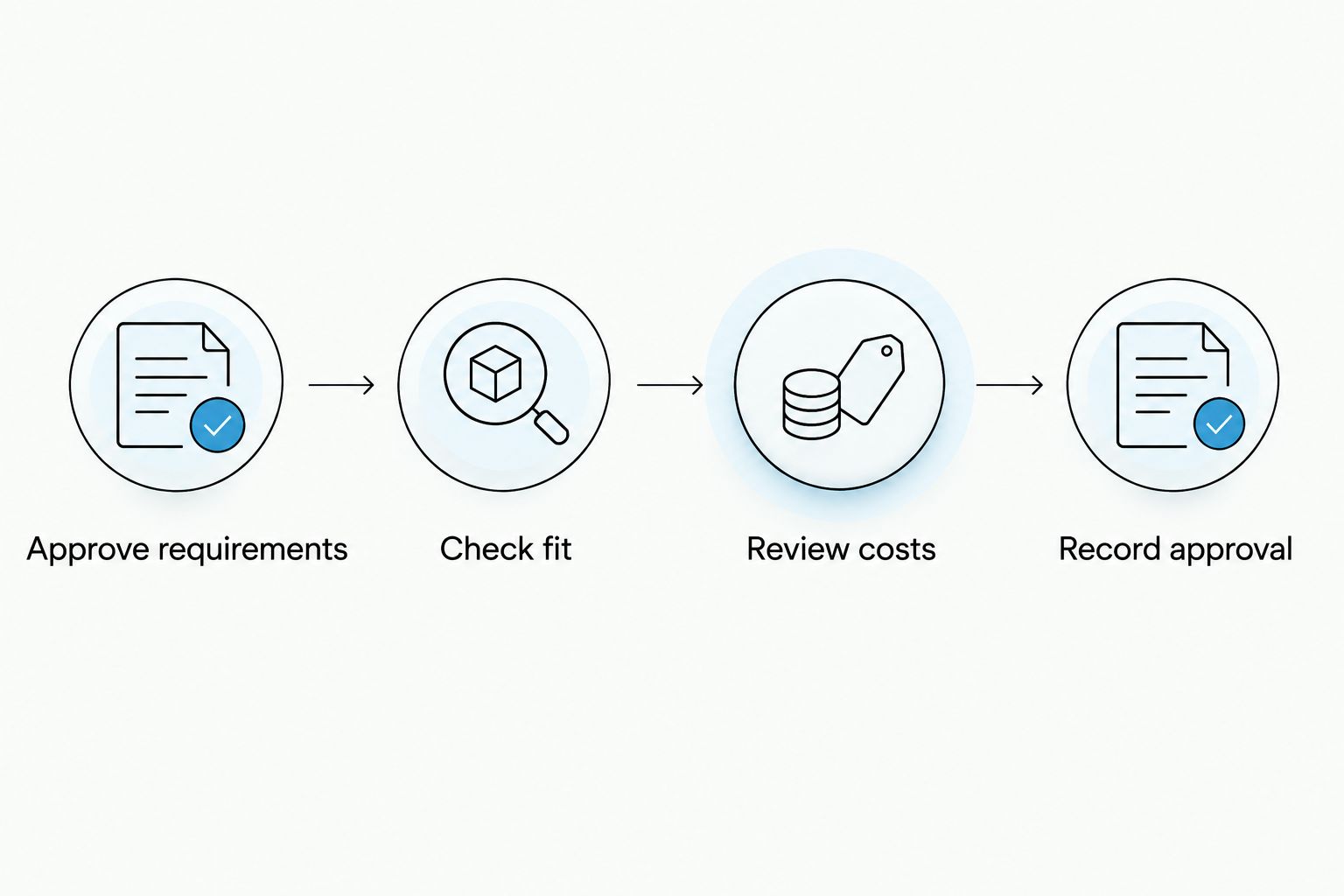
Compare packaging options for compounded preparations
Select the packaging category before comparing suppliers. The table separates buying situations; it does not establish that a container is appropriate for a specific formulation. Confirm current purchasing terms directly when you place the order.
| Option | Best for | Practical advantage | Key limitation |
|---|---|---|---|
| Rx amber vial with reversible cap | Approved prescriptions needing this vial-and-closure format | Combines a prescription-vial format with a reversible closure | Does not establish suitability for every compounded preparation |
| Liquid-dispensing container with matching closure | Preparations requiring a liquid-specific dispensing setup | Lets you assess the container alongside the required measuring accessory | Material, closure, and accessory compatibility still require review |
| Ointment jar or other semisolid container | Preparations requiring access appropriate to a semisolid | Offers a format suited to filling and accessing semisolids | A familiar jar format does not establish compatibility or protection |
| Container documented for the intended sterile use | Sterile preparations requiring a specifically assessed packaging system | Supports review against the intended sterile application | Routine Rx-vial descriptions do not establish these properties |
Avoid adding an alternate format merely because it appears economical. An alternate earns shelf space when it has an approved use, a clear ordering record, and staff who know when to select it.
Common mistakes compounding-pharmacy buyers make
Treating amber color as a complete specification
Amber describes appearance, not the entire container's performance. Request the evidence relevant to the preparation and retain it with the approved item. Do not carry an approval from one amber container to another without review.
Confusing packaging choice with beyond-use dating
A container purchase does not establish a preparation's beyond-use date. Follow the applicable compounding requirements and formulation evidence. Keep the packaging decision connected to that assessment without treating the supplier listing as stability data.
Ordering caps as if fit were universal
Closures should match the approved container system. Similar-looking caps are not a sufficient basis for substitution. Record the pairing so staff do not mix components during receiving or dispensing.
Reordering from an old invoice alone
An invoice records a transaction, not necessarily the approved specification. Match repeat orders to the item record, and investigate changed descriptions before accepting a substitute. This keeps convenience from becoming an undocumented packaging change.
FAQ
Are amber vials suitable for all compounded preparations?
No. Amber vials require preparation-specific review of the container material, closure, protection requirements, and intended use. Color alone does not establish suitability.
Can I use an Rx amber vial for a sterile compounded preparation?
Do not assume a routine Rx amber vial is suitable for sterile compounded preparations. Use a container with documented suitability for the intended sterile application and follow the applicable compounding requirements.
What's the best amber vial size for a compounded prescription?
The best size fits the intended quantity and dispensing method while meeting the preparation's packaging requirements. Check usable space, label placement, and any required accessory before approving the item.
Does an amber vial establish a longer beyond-use date?
No. Amber color does not establish a beyond-use date. Determine dating from the applicable compounding requirements and supporting evidence for the preparation and its packaging.
What should I confirm before ordering FujiMochi Rx amber vials?
Confirm the current size options, case contents, matching closure, and documentation relevant to your intended use. FujiMochi lists Rx amber vials with reversible caps for pharmacy prescription packaging.
How do I compare the cost of pharmacy vials?
Compare delivered cost per usable container after confirming equivalent approved specifications. Include case contents, closures, required accessories, and delivery charges in the same worksheet.
Do refrigerated compounded preparations need a different label?
The label must remain attached and readable under the preparation's required storage and handling conditions. Check the actual label-and-container combination for expected condensation rather than assuming a material name guarantees performance.
One last thing
Put the reorder instruction beside the packaging approval, not just in the purchasing account. Before your next 2026 order, ask a staff member to identify the approved vial, matching cap, permitted use, and substitution rule from that record. Any uncertainty identifies a documentation problem to fix before the next case arrives.

