
Before buying prescription bottles online, confirm the vial size, closure mechanism, cap compatibility, case contents, and delivered order total. Then check that the packaging matches your pharmacy’s labeling and dispensing requirements; an amber bottle or a familiar-looking cap is not enough to establish suitability. This 2026 buying guide explains what to verify before your first order and what to record for the next one.
- Buy prescription bottles by verified size, closure, case contents, and delivered total—not appearance alone.
- FujiMochi serves independent pharmacies buying Rx vials; confirm the selected product’s details before ordering.
- Reversible caps require clear operating instructions; do not infer the closure setting from a photo.
- Keep an approved order record so prescription packaging reorders match the original specifications.
Why this matters
A listing can look right while leaving a purchasing question unanswered. The bottle pictured does not establish which size you selected, which caps arrive with it, or how many usable vial-and-cap sets the order contains.
For an independent pharmacy, those details belong in the buying decision—not in a discussion after the shipment arrives. Start with the pharmacy vials, caps, sizes, and ordering basics, then use the checks below against the actual listing you intend to order.
Approve the complete vial-and-closure combination, not just the bottle. A purchasing record should tell another staff member exactly what to reorder without relying on memory or a product photograph.
Buying prescription bottles online: what should you check?
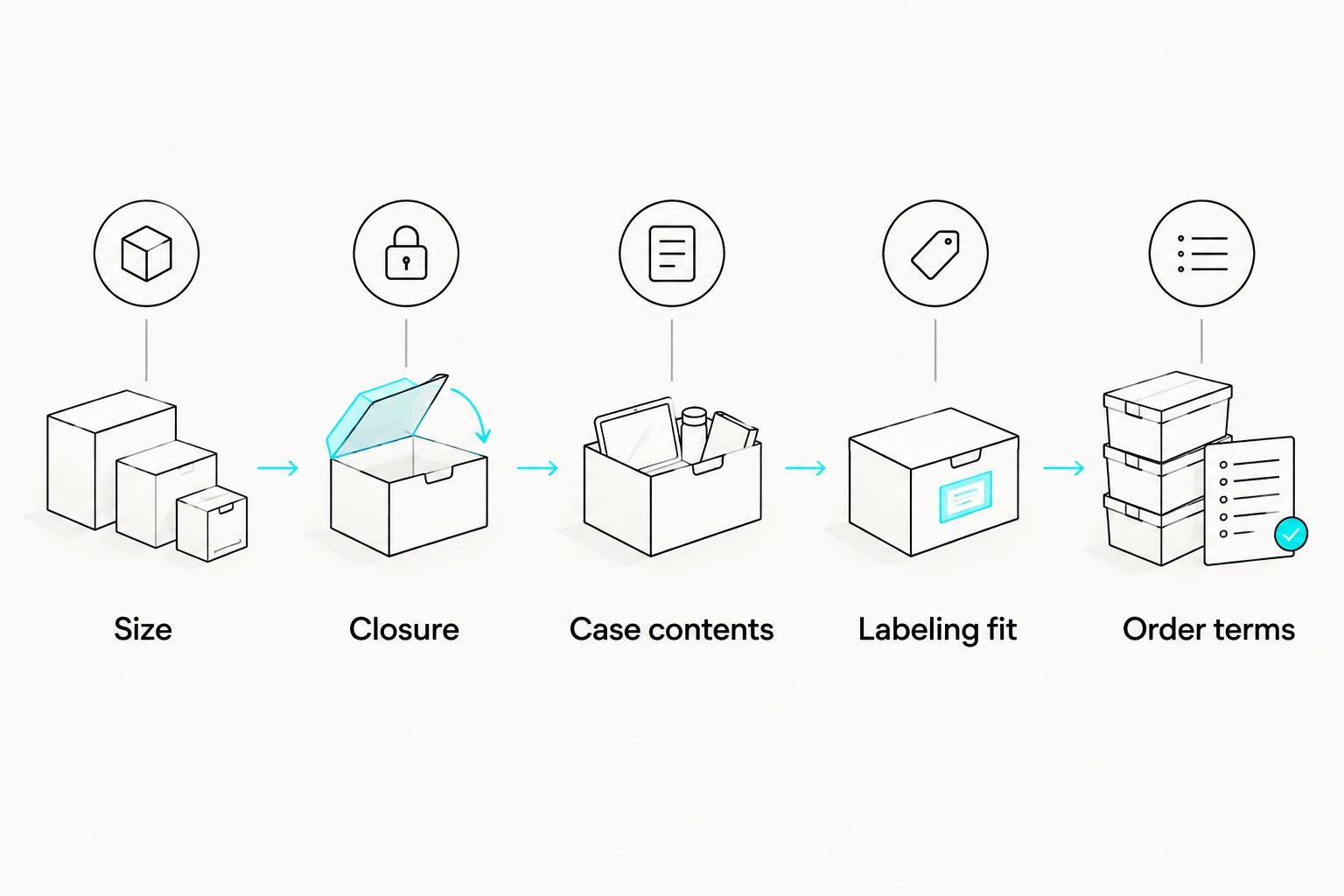
Check the selected variant, the closure, the contents of the case, the labeling surface, and the terms shown at checkout. Work through these checks in order so you do not compare totals for packaging that fails your requirements.
1. Confirm the selected size
Read the selected option, not just the product title. If a page offers several sizes, confirm that the cart carries the size you intended to buy.
Use your pharmacy’s established packaging requirements and actual dispensing work to choose capacity. Do not assume the same tablet count fits every medication: tablet and capsule dimensions differ, and nominal vial capacity does not establish a universal pill count.
Record the supplier’s size designation exactly. If the listing uses a capacity unit that your purchasing sheet does not use, resolve the mismatch before ordering rather than treating different units as interchangeable.
2. Confirm the closure
Identify the closure mechanism and read the operating instructions. A description such as reversible, push-down, or easy-open needs enough explanation for your team to understand the intended configuration.
Keep the purchasing decision separate from the dispensing decision. Buying a reversible closure does not determine which configuration is appropriate for a particular prescription or patient; your pharmacy still applies the relevant requirements.
Ask for clarification when the description and photograph leave different impressions. A cap’s appearance is not evidence of its operating mechanism.
3. Confirm the case contents
Establish whether the listed quantity refers to bottles, caps, or complete sets. Check whether closures are included and whether the selected size changes the case contents.
Compare orders using the same unit: a usable vial-and-cap set. A carton of bottles alone is not the same purchasing unit as a carton containing the bottles and matching closures you need.
Do not infer cap compatibility because two containers look alike. Confirm the intended pairing through the supplier’s specifications before mixing a new vial with closures already on your shelf.
4. Confirm the labeling fit
Check the available labeling surface against your actual label format. A vial that holds the contents still needs to accommodate the required label information in a readable arrangement.
For a new format, assess a representative container before committing it to routine use. Check label placement, application, and readability with your existing process rather than assuming that a similar-looking bottle behaves identically.
5. Confirm the order terms
Review the selected items, quantities, delivery information, and final total before submitting payment. Check the current return terms as well, particularly when ordering an unfamiliar size or closure.
Save the confirmation with the specifications you approved. For your 2026 purchasing file, the useful record is the actual order and its terms—not a remembered headline offer.
Reordering versus trying a new prescription bottle
An exact reorder and a new packaging choice need different levels of review. Use the comparison below to decide which checks need fresh attention; neither approach removes the need to verify the current cart.
| Buying approach | Best for | Practical advantage | Limitation | Check before approval |
|---|---|---|---|---|
| Exact reorder | A previously approved vial-and-cap combination | Gives staff an established specification to match | A familiar listing does not prove the selected variant is unchanged | Match the product, size, closure, and case contents to the approved record |
| New size or closure | A defined packaging need your current order does not cover | Lets you assess a format against that specific need | Requires a fresh fit and workflow review | Confirm suitability, cap operation, label fit, and order terms |
Reorder from a written specification, not from recognition. If you change the size, closure, or supplier product, treat the change as a new packaging decision until your pharmacy has reviewed it.
For a first order, resolve unanswered questions before increasing the quantity. A larger order does not fix uncertainty about what the carton contains.
What changes which prescription bottles you should order?
The right purchase depends on the work the packaging must support. These factors deserve attention before you decide how much to order:
- Contents and fit: Choose capacity around the actual contents and your pharmacy’s packaging requirements, not an assumed tablet count.
- Closure requirements: Confirm the mechanism and documentation, then apply the appropriate dispensing requirements.
- Label format: Check the usable surface against the information your pharmacy needs to display.
- Case configuration: Confirm included caps and usable sets so order quantities mean the same thing across listings.
- Storage space: Plan where the incoming cartons will go and how staff will identify each size and closure.
- Reorder history: Use actual consumption records when setting quantities instead of treating a larger carton as automatically preferable.
Keep these factors separate in your approval sheet. A bottle can satisfy the capacity requirement while still needing clarification on its closure or case contents.
What should you check on a reversible-cap listing?
Read how the closure works and which configuration the supplier describes. Reversible is a purchasing description, not permission to skip the instructions or substitute an unverified cap.
The Rx amber vials with reversible caps listing describes a two-piece closure design with a push-down mechanism for a child-resistant configuration. Before ordering, verify the selected size, included quantity, operating instructions, and supporting information relevant to your pharmacy’s use.
FujiMochi is for independent pharmacy buyers seeking Rx vials from a pharmacist-owned supplier. That makes the product relevant to pharmacy purchasing, but it does not replace a specification review. The supplied description alone does not establish every size, case configuration, or packaging requirement for your intended use.
Do not treat amber color as proof that a container is appropriate for every medication. Follow the applicable storage and packaging requirements, and obtain the documentation needed to assess the specific container-and-closure combination.
How do you compare prescription bottle orders fairly?
Compare equivalent packaging first, then compare the delivered order total. Otherwise, you risk weighing a complete vial-and-cap order against a bottle-only order or comparing different capacities as though they were substitutes.
Use a short purchasing worksheet:
- Exact product and selected size.
- Closure type and whether matching caps are included.
- Confirmed number of usable sets.
- Delivery charges and other charges shown at checkout.
- Current return terms and any unresolved questions.
For your 2026 comparison, use current checkout information rather than an old invoice as the final offer. Historical invoices help you track spending, but they do not establish today’s order terms.
Avoid calling an order a saving until the contents and total are comparable. A lower displayed amount does not answer whether you are buying the same usable packaging.
What should you save for the next reorder?
Save the exact product identifier, size, closure description, case contents, and order confirmation. Add the name of the person who approved the packaging and any supplier clarification that affected the decision.
Keep the approved record where purchasing staff can find it. A screenshot can help document a selection, but it should not replace readable specifications or the actual confirmation.
Before the next order, match the current selection against that record. If a detail differs, review the difference rather than assuming it is a harmless listing change.
A useful 2026 reorder sheet also separates approved alternatives from unresolved options. Staff should not have to guess whether a previously considered vial was accepted or merely discussed.
FAQ
What should I check before buying prescription bottles online?
Check the selected size, closure mechanism, cap compatibility, case contents, labeling fit, and delivered order total. Resolve unclear specifications before placing the order.
Do prescription bottles always come with caps?
Do not assume prescription bottles include caps. Confirm whether the listing quantity covers bottles alone or complete vial-and-cap sets, and verify the selected variant.
Can I use my existing caps on new prescription bottles?
Use existing caps only when their compatibility with the new vials is confirmed. A similar appearance does not establish that the container and closure are an appropriate pairing.
Does an amber prescription bottle suit every medication?
Amber color alone does not establish suitability for every medication. Check the applicable packaging and storage requirements and the documentation for the specific container-and-closure combination.
Are reversible caps always child-resistant?
Do not assume every reversible-cap configuration is child-resistant. Read the product’s operating instructions and supporting information, and apply the requirements relevant to the prescription being dispensed.
How do I compare prescription bottle orders without relying on the displayed amount?
Compare the same size, closure, and number of usable vial-and-cap sets before comparing the delivered total. Include the charges shown at checkout and review the current order terms.
What should I verify before ordering Rx vials from FujiMochi?
Verify the selected Rx-vial size, closure instructions, included caps, case quantity, and current checkout terms before ordering from FujiMochi. Keep the approved specifications with your order confirmation for future reorders.
One last thing
The most useful reorder note is not simply that the bottle worked. Record which vial, which cap, which size, and which label setup your pharmacy approved.
Before your next 2026 order, ask someone who did not place the original purchase to read that record. If they cannot identify the intended combination without asking the original buyer, improve the record before submitting another order. The goal is a repeatable purchase, not a familiar photograph.

