
Choose reversible cap vials when you need a closure that supports different opening modes; choose plain snap cap vials when an easy-opening, non-child-resistant closure is appropriate for the prescription. This 2026 buying guide compares the closure types—not competing suppliers—so you can order around dispensing requirements rather than cap names.
- Reversible cap vials suit pharmacies that need different opening modes within a compatible vial-and-cap system.
- Plain snap cap vials suit dispensing situations where a non-child-resistant closure is appropriate.
- Neither closure name proves child resistance, cap compatibility, or suitability for a particular prescription.
- Compare matching vial sizes, case contents, and delivered order totals before choosing pharmacy packaging.
Why this matters
A closure decision affects what your team stocks, how staff select packaging, and what patients must do to open it. Choose the opening method first, then check the complete vial-and-cap combination.
FujiMochi is a pharmacist-owned supplier of prescription vials and pharmacy packaging for independent pharmacies. Its RX Amber Vials w/ Reversible Caps listing describes a two-piece design with a push-down mechanism for the child-resistant configuration. Follow the product’s instructions for the exact opening and conversion procedure.
FujiMochi prescription vials are an option for independent pharmacy buyers sourcing amber vials with reversible caps. The buying decision still rests on the closure requirements, dimensions, and documentation for your intended use.
At a glance
In this comparison, “plain snap cap” means an easy-opening snap-on closure, not a documented child-resistant snap-closure system. A cap that snaps into place is not automatically non-child-resistant; check the specific product.
| Dimension | Reversible cap vials | Plain snap cap vials |
|---|---|---|
| Best for | Buyers needing different closure modes | Buyers needing an appropriate easy-opening closure |
| Opening method | Depends on the selected cap orientation and design | Uses the specified snap-cap opening action |
| Child resistance | Depends on the documented vial-and-closure configuration | Do not treat a plain easy-opening cap as child-resistant |
| Patient access | Offers an alternate mode when appropriate | Keeps the easy-opening function straightforward |
| Staff handling | Requires attention to cap orientation | Requires clear separation from child-resistant packaging |
| Fit and compatibility | Requires the matching vial finish and cap | Requires the matching vial finish and cap |
| Pricing model | Compare the complete vial-and-cap order | Compare the complete vial-and-cap order |
| Standout feature | Reversible closure configuration | Dedicated easy-opening closure |
Reversible caps win when you need different opening modes
A reversible closure changes function according to its design and orientation. That makes it relevant when your pharmacy needs access to different opening modes without treating every cap as a separate closure type.
The advantage is flexibility, not permission to use either mode interchangeably. Staff must select the configuration appropriate for the prescription and follow the manufacturer’s directions.
- Best for: Buyers who want a reversible closure system and can train staff on its correct use.
- Advantage: The cap’s alternate configuration is part of the closure design.
- Limitation: Orientation becomes another detail staff must check.
Do not assume every reversible cap opens the same way. For a 2026 purchasing review, retain the current instructions with your approved item record rather than relying on how an older cap worked.
Plain snap caps win for a dedicated easy-opening task
Plain snap caps serve a narrower purpose: an easy-opening closure where that packaging is appropriate. They do not offer the same reversible-mode choice.
That narrower function can suit a pharmacy that deliberately maintains a separate easy-opening packaging line. The tradeoff is inventory separation: staff need to distinguish that line from packaging intended to meet child-resistant requirements.
- Best for: Buyers stocking a clearly identified easy-opening option for appropriate dispensing situations.
- Advantage: Staff do not choose between reversible cap orientations.
- Limitation: A plain snap cap does not replace required child-resistant packaging.
Choose a plain snap cap for its intended opening function, not because the cap looks simpler. Actual usability depends on the specific closure and the person opening it.
Neither cap name proves child resistance
“Reversible” describes a configuration feature. “Snap” describes a closure action. Neither word, by itself, establishes that a particular vial-and-cap combination meets child-resistant packaging requirements.
In the United States, the Poison Prevention Packaging Act and applicable requirements in 16 CFR Part 1700 govern special packaging for covered substances. Child-resistant packaging is not childproof, and a cap’s appearance is not evidence of compliance.
Before approving either closure, check:
- The exact vial and closure combination covered by the manufacturer’s documentation.
- The configuration required for the child-resistant function.
- The instructions staff must follow when closing and reopening the package.
- Whether the intended dispensing situation permits a non-child-resistant closure.
Some prescriptions can be dispensed in non-child-resistant packaging under applicable exceptions or requests. Apply the relevant requirements and your pharmacy’s procedures; do not let a purchasing preference determine the legal packaging choice.
Verdict: neither closure wins on safety by name alone. Documented performance and correct use decide the issue.
Patient access has no universal winner
An easy-opening closure is not automatically easy for every patient. Grip strength, dexterity, and the particular opening action all matter.
A reversible design offers an alternate configuration when appropriate. A plain snap closure provides a dedicated opening method. Neither description establishes which one a particular patient can use successfully.
During product evaluation, have staff assess the actual opening and closing actions using empty samples. Keep that exercise separate from a patient’s dispensing decision and from any formal child-resistance testing.
Check these practical details:
- Can the user identify the intended opening action?
- Does the cap reclose according to its instructions?
- Can staff explain the closure without confusing its modes?
- Is the selected packaging appropriate for the prescription and household circumstances?
Verdict: choose patient access case by case, not by closure category. Do not promise that either cap prevents medication errors or improves adherence.
Staff handling favors the system you can distinguish clearly
Reversible caps require an orientation check. Plain snap caps require a selection check against the child-resistant packaging stocked nearby. Each system creates a different training task.
For reversible packaging, teach staff how the cap’s configuration changes its function. For plain snap packaging, identify the bins and purchasing records clearly so an easy-opening closure does not become an accidental substitute.
Neither arrangement is inherently faster based on the product names alone. Evaluate the actual handling steps at your bench before deciding which workflow you prefer.
For your 2026 packaging review, make the training specific:
- Identify the approved vial-and-cap pairing.
- Demonstrate the correct closure action.
- Explain how staff recognize the intended configuration.
- Record who handles questions about substitutions.
Verdict: both systems need training; the better fit is the one your team can identify and use correctly. A familiar-looking replacement still needs a compatibility check.
Both closure types require an exact compatibility check
Matching the stated vial capacity does not establish cap compatibility. The vial opening and closure design must also match.
Do not combine leftover caps and newly ordered vials solely because both are described as prescription packaging. A closure that appears to fit is not proof that the combination performs as intended.
Compare the actual components against your approved item record. Check the manufacturer’s identification, closure instructions, and supplied documentation—not just a product photograph.
This is also where first-time buyers should separate capacity from pack quantity. Vial capacity describes the container; case contents describe what you are ordering. Confusing those fields can leave you with the wrong packaging or an order that does not match your intended stock level.
Verdict: compatibility is a tie. Both closure types require a verified pairing, and neither earns an exception because it resembles existing stock.
Compare order structure, not an isolated price
For your 2026 comparison, build equivalent orders before judging cost. A vial-only listing and a vial-with-cap listing are different purchasing units, even when the vial descriptions look similar.
Check whether closures are included, how case contents are expressed, and which charges apply to the completed order. Use the current store page and checkout details rather than an old invoice or a search-result snippet.
| Purchasing question | Why it matters |
|---|---|
| Are caps included? | Separate closures change what you must order |
| Are the vial sizes equivalent? | Different capacities are not a like-for-like comparison |
| Are case contents equivalent? | A case label alone does not define quantity |
| Is the closure configuration documented? | An unsuitable package is not a useful substitute |
| What is the delivered order total? | The product listing alone does not describe the full purchase |
FujiMochi’s prescription-vial listing is the place to check current product details and offers. Confirm any shipping terms, order requirements, or claimed savings before using them in your purchasing decision.
Verdict: neither closure type wins on cost without an equivalent order comparison. Reversible packaging offers configuration flexibility; a dedicated snap-cap line keeps the easy-opening function separate. Those are operational tradeoffs, not proof of savings.
Approve the purchase in four steps
Use the same approval sequence for reversible and plain snap closures. It keeps an attractive listing from becoming an unverified substitution.
- Define the use. Establish whether the intended dispensing situation requires child-resistant packaging or permits an easy-opening closure.
- Match the components. Confirm the vial, cap, configuration, and supporting documentation as a complete system.
- Check the workflow. Review how staff select, close, explain, and store the packaging.
- Save the record. Retain the approved item details and instructions for the next order.
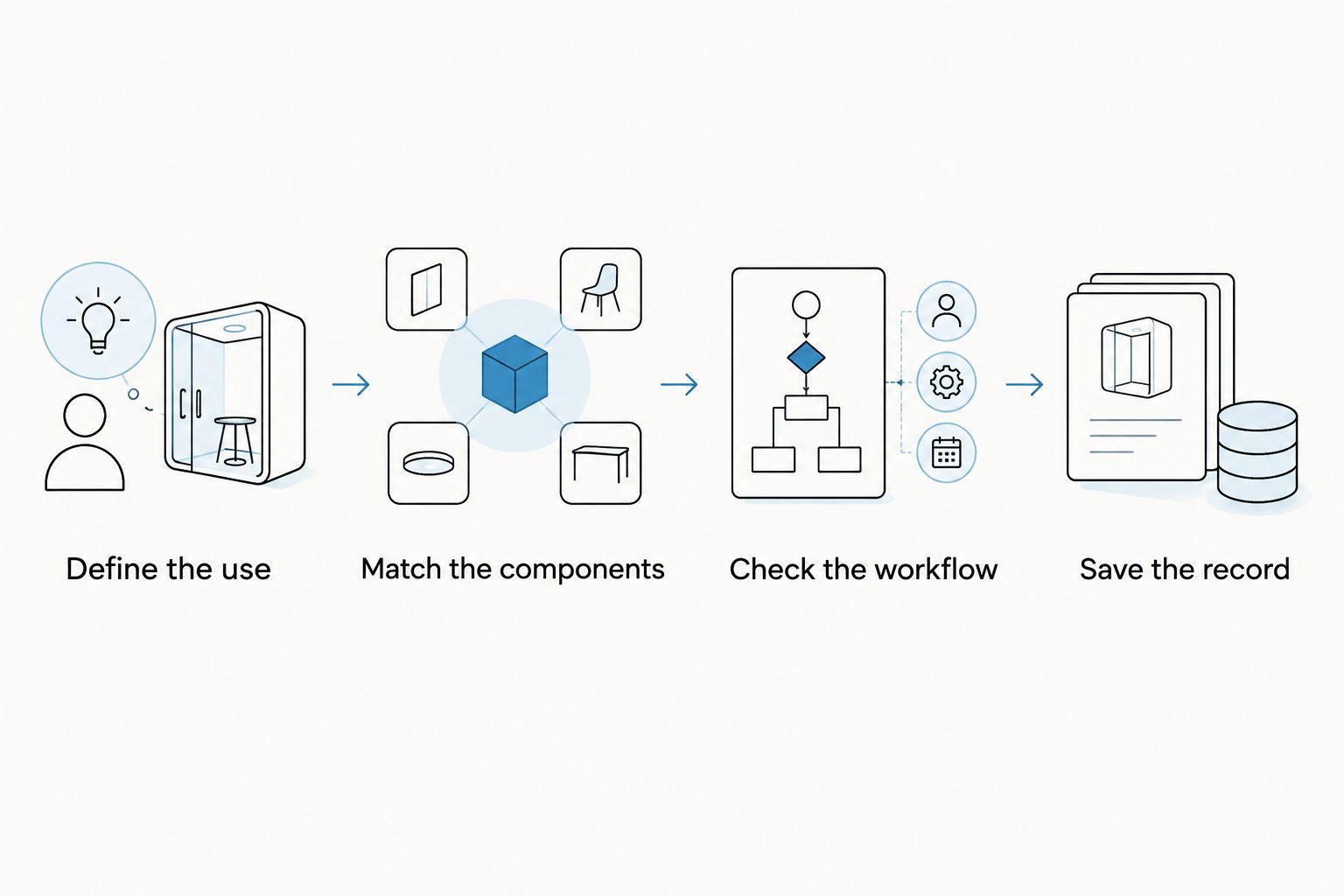
Make the record useful to someone other than the original buyer. Include the supplier item reference, the intended closure configuration, and the location of the instructions. When a supplier proposes a substitute, restart the compatibility check rather than approving it from memory.
Final verdict: choose the closure around the dispensing job
Choose reversible cap vials if you manage different opening modes
Reversible cap vials win for the independent pharmacy buyer who wants configuration flexibility within a documented, compatible system. Choose them when staff can identify the correct mode and follow the closure instructions consistently.
The tradeoff is attention to orientation. Do not treat the alternate mode as an informal shortcut around packaging requirements.
Choose plain snap cap vials if you need a separate easy-opening line
Plain snap cap vials win for the buyer who deliberately stocks a dedicated easy-opening option for appropriate prescriptions. Choose them when your selection and storage procedures clearly separate that option from child-resistant packaging.
The tradeoff is a narrower function. A plain snap cap is not a general replacement for a documented child-resistant closure.
| Dimension | Winner |
|---|---|
| Best for different opening modes | Reversible cap vials |
| Dedicated easy-opening function | Plain snap cap vials |
| Child-resistance assurance | Neither by name; verify documentation |
| Patient access | No universal winner |
| Staff handling | No universal winner |
| Fit and compatibility | Tie; verify both systems |
| Purchasing cost | No winner without equivalent orders |
| Standout flexibility | Reversible cap vials |
FAQ
What are reversible cap vials?
Reversible cap vials use a closure designed to provide different opening modes according to its configuration. Follow the specific product instructions; the cap name alone does not establish child resistance.
Are reversible cap vials better than snap cap vials?
Reversible cap vials are better for buyers who need different closure modes, while plain snap cap vials suit a dedicated easy-opening use. The correct choice also depends on packaging requirements and the documented vial-and-cap combination.
Are all snap caps non-child-resistant?
No. A snap action does not establish whether a closure is child-resistant. This guide compares plain easy-opening snap caps with reversible closures, not every snap-closure design.
Can a pharmacy use a non-child-resistant cap for any prescription?
No. Non-child-resistant packaging must be appropriate under the applicable requirements and dispensing circumstances. Follow your pharmacy’s procedures for permitted requests or exceptions.
Will a reversible cap fit my existing prescription vials?
Do not assume a reversible cap fits an existing vial. Confirm the exact vial finish, closure design, and manufacturer-supported pairing before combining components.
How should I compare the cost of prescription vials?
Compare equivalent vial sizes, case contents, included closures, and completed order totals. Check current store information rather than relying on temporary offers or an earlier purchase.
What should I check before reordering pharmacy vials in 2026?
Check the item reference, vial-and-cap pairing, closure instructions, and case contents against your approved record. Reassess any proposed substitution instead of treating a similar description as an exact match.
One last thing
Save the closure instructions with the purchasing record, not just the invoice. The invoice identifies the purchase; the instructions explain how the packaging is intended to function.
Before your next 2026 reorder from FujiMochi, compare the listing against that record. A small description change deserves a check before the replacement reaches the dispensing bench.

