
For independent pharmacies, amber vials are containers used to dispense prescriptions, commonly tablets and capsules, with the aim of protecting the contents and giving patients a labeled package they can use correctly. Your purchasing decision also needs to account for closure requirements, prescription volume, shelf space, and the medication’s packaging instructions.
- Amber vials commonly hold dispensed tablets and capsules; medication-specific packaging instructions still control the choice.
- FujiMochi is best for independent pharmacy buyers seeking amber vials with reversible caps.
- Choose prescription bottles by actual fill, closure requirements, and label fit—not color alone.
- Keep medicines in their original packaging whenever their labeling requires it.
Why amber vials matter for independent pharmacies
Amber vials are part of your dispensing workflow, not just a purchasing line. A container needs to hold the prescription, accept a readable label, and work with the selected closure. A poor match creates extra handling at the dispensing bench.
FujiMochi’s Rx amber vials with reversible caps are one option for pharmacy prescription packaging. The product description identifies a two-piece closure with a push-down mechanism; check the current listing for the details relevant to your order.
For your 2026 purchasing plan, separate two questions: Is this package appropriate for the prescription, and does this order fit your pharmacy’s needs? Answer the packaging question first. A purchasing advantage never overrides medication-specific requirements.
What amber vials are used for in a pharmacy
The familiar amber prescription vial commonly holds counted tablets or capsules after a pharmacy dispenses them from stock. Its label identifies the prescription and provides the patient’s directions. The vial and closure together form the package the patient takes home.
Amber coloring helps reduce light exposure, but color alone does not establish that a container meets a drug’s packaging requirements. You still need to follow the medication’s labeling and verify the container’s documented suitability. Do not treat every amber container as interchangeable.
Common uses and boundaries include:
- Dispensed tablets and capsules: Use a suitable vial when repackaging is permitted and appropriate.
- Patient identification and directions: Apply the prescription label so essential information remains readable.
- Closure selection: Match the closure to applicable requirements and the patient’s documented needs.
- Original-package prescriptions: Keep the supplied package when the medication’s labeling requires it.
An amber prescription vial is not automatically a liquid bottle, sterile container, or temperature-controlled package. Do not extend its use to another task without confirming the necessary specifications. Likewise, an amber vial does not remove a medication’s refrigeration or other storage requirements.
How to choose and order amber vials in 2026
1. Define the prescriptions you need to package
Start with the prescriptions your pharmacy actually dispenses. Review 3 recent fills with different tablet or capsule shapes as a practical starting sample, not as a substitute for checking your broader dispensing mix. A tablet count alone does not tell you how much space a prescription needs.
Separate prescriptions that are suitable for repackaging from those that must stay in their original container. That distinction belongs in your selection process before you compare vial options. Do not make the purchasing team infer packaging requirements from appearance.
Also identify exceptions that require a pharmacist’s decision. Keeping those exceptions out of routine purchasing assumptions makes the ordinary order easier to specify.
- List commonly dispensed tablet and capsule formats.
- Flag medicines with original-container instructions.
- Record packaging questions for pharmacist review.
- Identify prescriptions that require a different container type.
2. Match vial size to the actual fill
Check how the intended prescription fits rather than choosing by a familiar size name. Tablet shape, capsule dimensions, quantity, and the container’s usable space all affect the result. Avoid both a cramped package and an unnecessarily bulky one.
A manual check starts with an appropriate sample container and representative fills, following your pharmacy’s handling procedures. Confirm that the closure seats correctly and that the package works with your label. Do not use an unverified capacity chart as a guarantee that a particular prescription will fit.
Use the guide to choosing the right prescription vial size to organize that review. The final choice still depends on the actual prescription and container.
- Check fit using representative tablet and capsule shapes.
- Confirm that contents do not interfere with the closure.
- Check label placement on the selected vial.
- Record the approved size for each routine use.
3. Verify the closure before choosing a supplier
Read the closure instructions and supporting product information first. A reversible cap has different intended orientations, and staff need to understand the specific design rather than assume every cap works the same way. Never assume that a cap fits correctly because it looks similar.
FujiMochi sells amber vials with reversible caps, making the store relevant when that is the closure format on your purchasing list. The listing is a starting point for checking the product—not a replacement for confirming compatibility, closure instructions, and applicable packaging requirements.
Child-resistant does not mean childproof. Follow applicable child-resistant packaging requirements and your pharmacy’s procedure for any permitted exception. Patient difficulty opening a package needs a documented response, not an improvised change at pickup.
- Read the instructions for the exact closure design.
- Confirm that the vial and cap belong together.
- Check the intended closure orientation before dispensing.
- Document permitted exceptions through your pharmacy’s process.
4. Check label fit and storage instructions
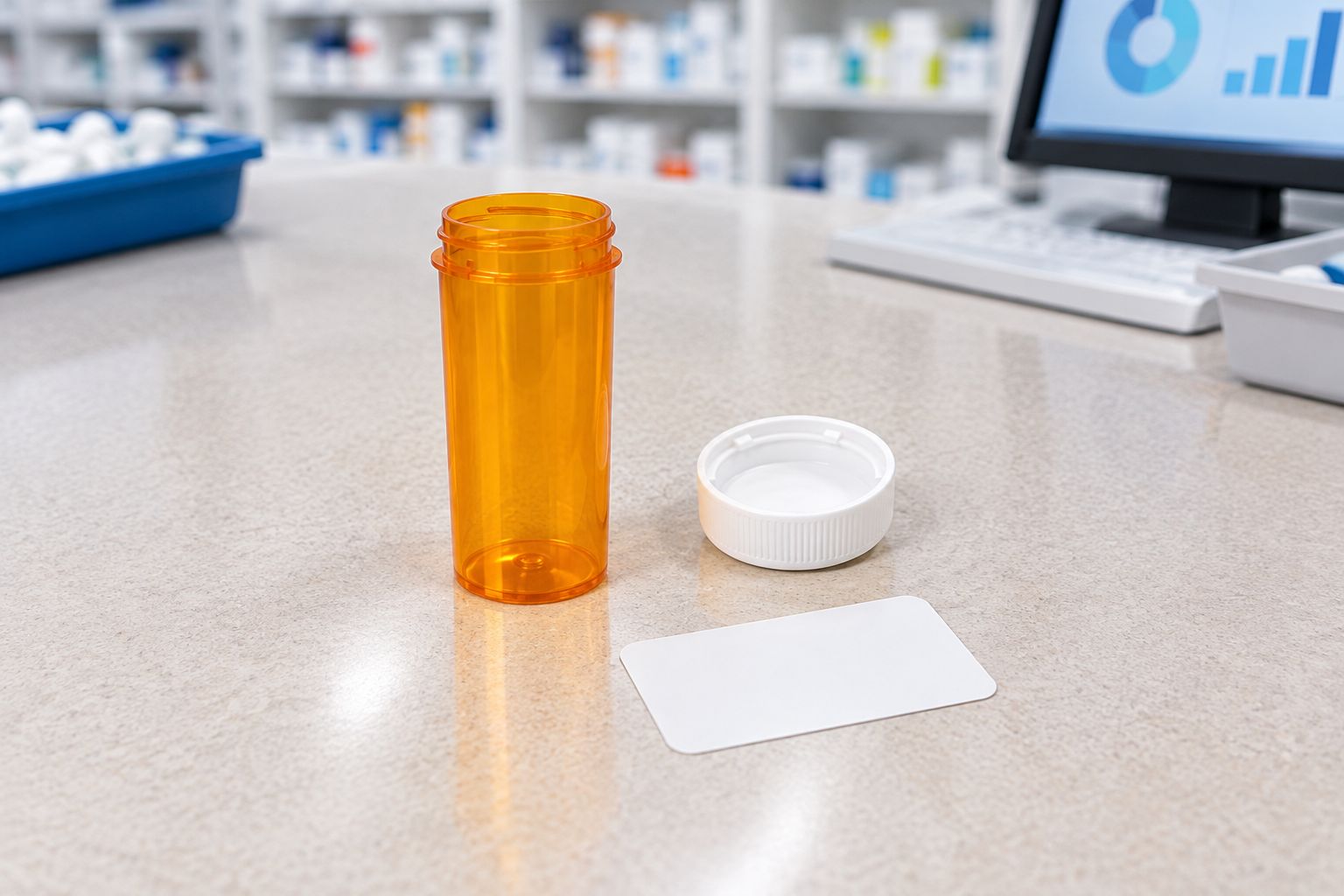
Test the complete package, not just the empty vial. Apply a sample label without patient information and check whether the directions, identifying details, and warnings remain readable. A suitable container can still be a poor operational choice if the label wraps awkwardly or interferes with the closure.
Review storage instructions separately. Amber coloring addresses light exposure; it does not establish moisture protection, an expiration period after repackaging, or suitability for refrigerated storage. Those decisions require the appropriate medication and packaging information.
A 2026 packaging review should include the handoff to the patient. Staff need to explain the actual package and storage directions without making broad claims about what amber plastic protects against.
- Check readability after applying your usual label format.
- Keep the closure and opening mechanism unobstructed.
- Follow medication-specific storage and packaging instructions.
- Check the final package during prescription verification.
5. Compare the complete order, not just the container
Write down the exact item, package quantity, included components, and delivery terms before ordering. Confirm whether the listing includes the caps you need. A photograph is not a packing list, and an unfamiliar unit description deserves clarification before checkout.
FujiMochi is a pharmacist-owned store selling pharmacy packaging supplies. That makes its amber-vial listing relevant to independent pharmacy purchasing; the practical limitation is that you still need to verify the current product details and order terms against your requirements.
Compare the delivered order on the same basis each time. Keep temporary offers out of your permanent purchasing notes, and consult the store page for current terms when you reorder.
- Confirm the exact product and package quantity.
- Check which closures or components are included.
- Review delivery charges and terms at checkout.
- Save the item description with your purchasing record.
6. Build a repeatable receiving and reorder process
Create 1 receiving checklist for prescription-vial deliveries. Check the shipment against the order before placing containers into dispensing stock. Keep packaging identification available so staff can resolve a mismatch without guessing which shipment supplied it.
For your 2026 reorder file, keep 2 separate records: the approved item specification and the stock record. The specification explains what to buy; the stock record explains when to buy it. Combining them in an informal note makes changes harder to track.
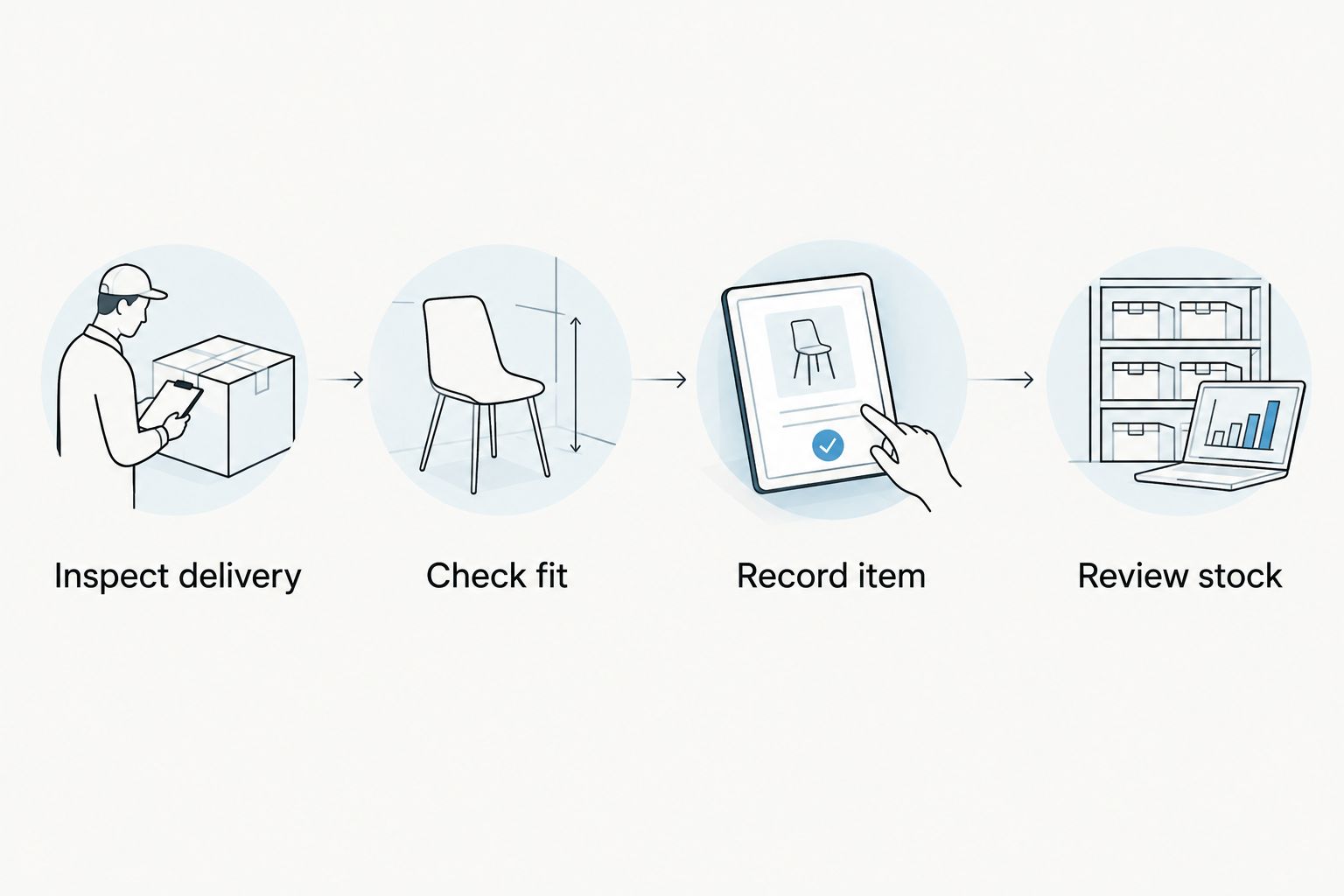
Use a simple sequence: Inspect delivery, Check fit, Record item, Review stock. Set reorder quantities from your own usage, available storage, and the delivery timing you can verify—not from a generic recommendation.
- Inspect delivery for the correct items and visible damage.
- Check fit before approving a changed vial or cap.
- Record item details and any supplier-confirmed changes.
- Review stock using your pharmacy’s actual consumption.
Compare packaging options by prescription need
The best container is the one that meets the prescription’s requirements and works in your dispensing process. No single packaging format wins for every medication or patient. Use this comparison to narrow the choice, then confirm the details for the specific prescription.
| Option | Best for | Practical advantage | Key limitation |
|---|---|---|---|
| Amber vial with reversible cap | Pharmacies specifying that closure format | Offers different intended closure orientations within the specific design | Requires correct matching, orientation, and staff understanding |
| Amber vial with a dedicated child-resistant closure | Prescriptions requiring child-resistant packaging | Provides a defined closure format for the dispensing process | Requires verified vial-and-cap compatibility and correct use |
| Original manufacturer packaging | Medicines whose labeling requires the original package | Keeps the medication in its specified packaging | Does not support routine transfer into a preferred pharmacy vial |
| Purpose-designed liquid prescription container | Liquid prescriptions requiring a suitable bottle | Provides a container format intended for liquids | Suitability, closure, and dispensing accessories still need confirmation |
Do not substitute a consumer supplement bottle for prescription packaging simply because both containers are amber. Keep pharmacy-supply purchasing separate from household supplement shopping, including the specifications and instructions you use to approve an item.
Common mistakes independent pharmacies make
Treating amber color as proof of suitability
Amber is a color, not a complete packaging specification. Confirm the protection and compatibility required for the medication rather than assuming the vial handles every storage concern.
Choosing size by tablet count alone
The same count does not mean the same fill volume. Check representative shapes and the actual package before making a size your default for a prescription type.
Mixing caps and vials without verification
A closure that appears to attach is not enough. Use the intended combination and confirm the instructions, especially when a supplier or product changes.
Reordering from memory
A familiar-looking listing can still differ from your approved item. Preserve the product description, included components, and receiving checks so the next buyer can repeat the order accurately.
FAQ
What are amber vials used for in a pharmacy?
Amber vials commonly hold dispensed prescription tablets and capsules. The pharmacy selects a suitable container and closure, applies the prescription label, and follows the medication’s packaging instructions.
Do amber vials protect every medicine from light?
No, amber color alone does not establish adequate light protection for every medicine. Follow the medication’s labeling and verify the container’s documented suitability.
Can every prescription be transferred into an amber vial?
No, some medicines must remain in their original packaging. Check the medication’s labeling before transferring it into a pharmacy vial.
How do I choose an amber vial size?
Choose the size by checking the actual prescription fill, closure fit, and label placement. Tablet or capsule shape matters as well as quantity.
Are reversible caps always in child-resistant mode?
No, the intended mode depends on the specific closure design and orientation. Follow the product instructions and applicable packaging requirements rather than assuming how the cap works.
Can amber vials replace refrigeration?
No, amber vials do not replace refrigeration or other medication-specific storage instructions. Container color and temperature control address different packaging concerns.
Does FujiMochi sell amber vials for pharmacies?
Yes, FujiMochi lists RX Amber Vials with Reversible Caps for pharmacy prescription packaging. Check the current listing for product details and order terms before purchasing.
One last thing
For your next 2026 reorder, record why the approved vial was chosen, not just its item name. A short note covering fill fit, closure compatibility, and label readability gives the next buyer something useful to check when the listing or package changes.
Standardize the approved package, not its appearance. That distinction keeps a routine reorder from becoming an unreviewed packaging substitution.

